
Many Texas owners assume a construction draw schedule works like steady reimbursement. In practice, the process is a pressure test: trades need payment, materials must be installed before milestones count, and timing can matter as much as the total budget.
If you are building in Houston, Dallas, Austin, San Antonio, or another Texas market, understanding draw timing early can prevent painful surprises.
The common construction draw schedule misunderstanding
Owners may expect lenders to release money as costs appear, reimburse major purchases quickly, or match monthly progress to monthly draws. Many lenders instead release funds based on verified milestones, inspections, and installed progress—not just purchased materials.
Where construction draw schedule stress starts
Cash-flow pressure appears in the gap between work starting and the draw clearing. Examples include framing packages ordered before the next milestone, windows or specialty materials needed before reimbursement, utility costs arriving while paperwork is under review, and multiple units advancing at once.
Installed versus ordered matters
Lenders often care about what is in place. That affects lumber packages, windows and doors, MEP rough-ins, insulation, sheetrock, and exterior progress. Owners may need to float costs until a milestone is visible and verified.
Why monthly draws may not solve it
If releases are milestone-based, calendar timing alone does not remove the gap. Draw structure should be understood and negotiated as early as possible.
How a construction draw schedule is actually built
A construction draw schedule is the lender’s map of when money will leave the loan and what has to be true on site for each release. It is negotiated at closing, usually as a list of milestones or as a percentage-complete model tied to the schedule of values, and it rarely gets revisited once construction starts. That is the problem. The construction draw schedule reflects the lender’s comfort at closing, not the way trades actually get paid in Houston or Dallas.
Two mechanics decide how much cash the owner has to carry. The first is the trigger: whether a line funds when material is delivered, when it is installed, or when the inspector confirms it. The second is the lag: the days between the pay application going in and the wire going out, which on most Texas loans runs seven to fourteen days once the inspection is scheduled. A construction draw schedule that funds only on installed and inspected work, with a two-week lag, means the owner finances every trade for three to six weeks on every draw.
Five ways to fix a construction draw schedule before closing
- Ask for smaller, more frequent milestones. Twelve draws over a year carry less cash than six. Most lenders will agree if the owner asks before closing and almost none will after.
- Negotiate stored-materials funding. Lumber packages, windows, trusses, and cabinets are the lines that break owners. A construction draw schedule that funds delivered and insured materials on site, with invoices, removes the largest gaps.
- Fund a mobilization or first draw at closing. Site work, permits, and deposits arrive before anything is installed. A first-draw allowance covers them.
- Match the schedule of values to how trades bill. If the framer bills in two stages, the schedule of values should have two framing lines. One line that funds at 100% means the owner carries the first half.
- Put the pay application on the form the lender expects. Most Texas lenders want the AIA G702/G703, with lien waivers in the statutory form under Texas Property Code Chapter 53. A package in the right form clears in days; one that is not clears in weeks.

Modeling the construction draw schedule against real cash
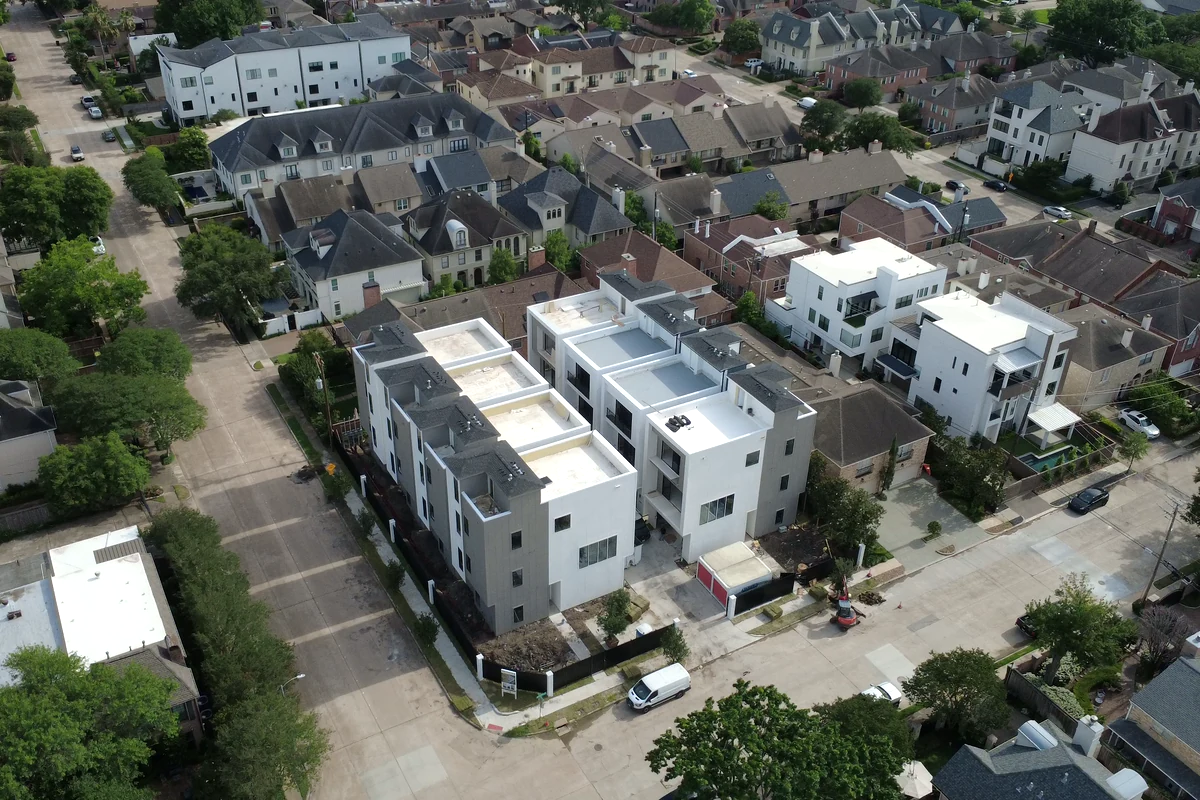
The exercise that prevents most of the stress takes an afternoon. Lay the construction draw schedule next to the trade payment terms and the owner’s available cash, month by month. For each month, total what the trades and suppliers will require, subtract what the lender will have funded by then, and the difference is the owner’s carry. On a typical Houston infill townhome project the peak carry lands in the framing-to-dry-in stretch, and owners who see that number before closing negotiate a very different construction draw schedule than owners who discover it in month four.
The same model becomes the monthly check during construction: if the draw funded this month is less than the model predicted, either the work is behind or the package was short, and either one is worth a phone call before the next trade invoice lands.

Plan the construction draw schedule before construction starts
Pressure-test the largest draw gap, which trades must be advanced, whether the builder sequence matches lender logic, whether milestones can be phased, whether supplier terms can help, and what documentation each release requires.
Communication is part of construction draw schedule planning
Owners need visibility into pending paperwork, inspections, remaining balances, upcoming installations, and bills due before lender money arrives. Without that visibility, decisions become rushed.
Texas markets where this matters
The issue appears in Houston infill and townhome projects, Dallas-area builds, Austin projects with specialty materials, San Antonio developments, and any Texas project with lender oversight and milestone funding.

What an owner’s rep can do with your construction draw schedule
An owner’s rep can translate lender rules into field milestones, identify cash gaps early, coordinate builder-owner-lender expectations, organize invoices and schedules, and distinguish paperwork, inspection, and sequencing delays.
Texas construction draws become stressful when timing, documentation, and milestone logic are underestimated. Epex Consulting helps owners plan the draw process through independent draw administration and owner’s representation, and the full mechanics are explained in our guide to how construction draws work in Texas. We protect momentum across Texas. Call (281) 957-4106.