
Texas construction contingency — short answer: Carry a documented reserve for risks that are plausible but not fully priced. A useful starting point is 5–8% of hard costs when plans are well developed and 8–12% when design or site information is still moving. Renovations, occupied buildings, difficult civil work, and accelerated schedules may justify more. These are planning ranges—not a bid, lender requirement, or guarantee.

Texas construction contingency: what it covers
A contingency is not extra profit and it is not a substitute for a complete estimate. It is a controlled reserve for risks that are plausible but not fully priced when the budget is prepared. Examples include concealed conditions, incomplete details, utility conflicts, code-driven revisions, escalation between estimate and buyout, and small scope gaps discovered during coordination.
Owners should separate three buckets:
- Design contingency: allowance for unresolved design and scope decisions.
- Construction contingency: reserve for execution risk after the contract is awarded.
- Owner contingency: funds for owner-requested changes, upgrades, or business decisions.
Combining them into one unexplained percentage makes it difficult to know whether risk is declining or simply being spent.
How much Texas construction contingency should owners carry?
| Project condition | Starting planning range | Why it changes |
|---|---|---|
| Competitive bid, coordinated documents | 5–8% of hard costs | Fewer unknowns, but procurement and field risk remain. |
| Early design or incomplete site data | 8–12% | Scope, utilities, civil work, and quantities can still move. |
| Renovation or occupied facility | 10–15%+ | Concealed conditions and phasing create more uncertainty. |
| Accelerated or supply-constrained schedule | Separate escalation allowance | Schedule pressure can create premium labor and material costs. |
Do not apply a percentage mechanically. A $2 million interior renovation with unknown existing conditions may carry more risk than a larger ground-up project with complete documents and verified utilities.
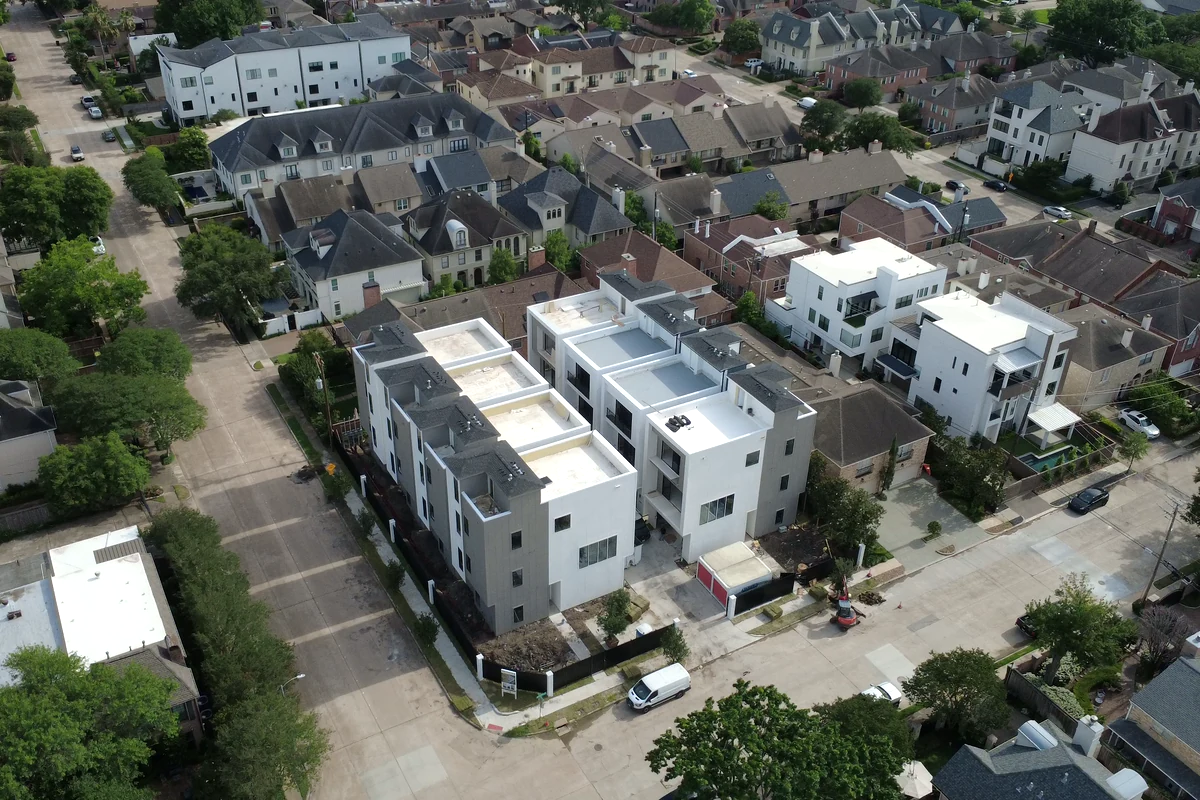
Texas construction contingency by project phase
Set the reserve at budget approval, then reforecast it at design completion, trade buyout, and each major cost report. Retire a risk only when there is evidence: a verified utility location, approved submittal, signed allowance, or completed inspection. That evidence-based approach keeps the Texas construction contingency tied to actual exposure.
A practical contingency checklist
- List the risks. Name each risk, its likelihood, potential cost, and response owner.
- Price known gaps separately. If a scope is probable, carry an allowance or clarify it in the bid instead of hiding it in contingency.
- Validate local conditions. Houston drainage and utility issues differ from Dallas–Fort Worth, Austin, San Antonio, and other Texas markets.
- Set approval rules. Require a written description, backup, and owner approval before contingency is moved to a change order.
- Track the balance monthly. Report original reserve, approved uses, pending exposure, and remaining reserve.
- Do not use contingency to mask poor change control. Repeated discretionary upgrades should be funded by the owner, not presented as unforeseen risk.
When can an owner release contingency?
Release it in stages as risk is retired: after trade buyout, civil and utility verification, major submittal approval, and key inspections. Document each release in the cost report and support it with evidence that the related risk is closed. Keeping every dollar locked until closeout can restrict cash unnecessarily; releasing everything early removes the safety net.
How owner-side oversight protects the reserve
An owner’s representative can connect the estimate, schedule, procurement log, pay applications, and change-order register so the contingency balance reflects reality. Epex Consulting’s owner’s representation services support commercial owners across Texas, including Houston and surrounding areas, Dallas–Fort Worth, Austin, San Antonio, and other markets. Our development budget review helps identify missing scope, allowances and cost exposure before you commit. For a project-specific review, use the project review request.
For safety planning and jobsite risk controls, review OSHA construction guidance and confirm local requirements with the Texas Department of Licensing and Regulation.
Frequently asked questions
Is contingency based on the total project cost?
Usually it is modeled against hard construction costs, with soft costs and financing exposure tracked separately. Confirm the basis with the lender, estimator, and contract documents.
Should contingency be included in the contractor’s contract?
That depends on the delivery method and risk allocation. Owners should identify who controls each reserve and how unused funds are returned or reallocated.
What is the biggest contingency mistake?
Using one percentage to hide incomplete scope. A risk register and transparent allowances produce a more useful budget than a larger unexplained reserve.
Can a contingency protect an owner from every overrun?
No. It cannot replace due diligence, complete documents, qualified bidders, realistic schedules, or disciplined change control.

Bottom line
Carry enough Texas construction contingency to match the project’s uncertainty, then reduce it only when evidence retires the risk. A clear reserve structure helps Texas commercial owners make decisions early, protect cash flow, and see whether a project is improving or drifting.
Disclaimer: This article provides general construction-planning information, not legal, tax, engineering, lending, or project-specific financial advice. Have your estimator, design team, lender, and counsel validate the appropriate contingency for your project.