
A townhome case study in construction management and draw administration: how Epex Consulting managed construction and ran the draws across an eight-unit townhome development in Houston. Each was a legally separate project sharing one jobsite.
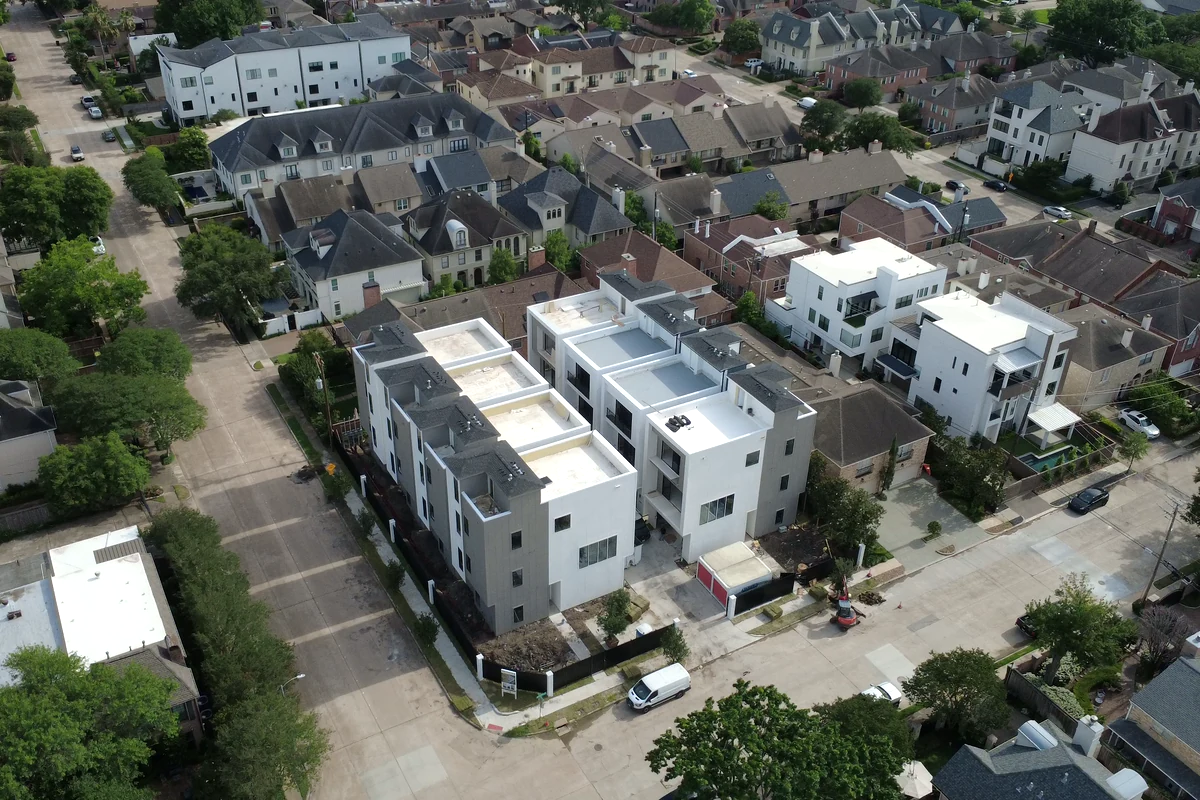
On paper the project looked like one development. In reality it was eight. Eight adjacent townhome units, each owned by a separate single-purpose Texas LLC, each carrying its own construction loan personally guaranteed by its principal, each with its own schedule of values and its own draw sequence. All eight were built by one builder on one shared jobsite with shared drives, utilities, and subcontractor mobilizations.
That combination is where multi-owner developments quietly bleed money. A subcontractor invoice covers work on three units at once. A shared utility tie-in benefits all eight. A deposit lands referencing only a first name that belongs to two different lots. Without airtight per-lot discipline, dollars get co-mingled, one owner ends up subsidizing another, and the lender loses confidence in every draw that follows. The owners needed to see their own numbers, cleanly separated from everyone else’s, while the lender needed draw packages it could fund without a second look.
Epex Consulting managed construction and served as the owner’s representative across all eight lots. We did not hold the construction contract and we took no builder margin. Our job was to keep the work moving, protect each owner’s budget, verify each draw, and keep every dollar attributable to the lot that spent it. That independence is the point: the party checking the draw has no incentive hiding behind the recommendation.
Each unit got its own schedule of values (an identical 37-line template across all eight units), its own draw counter, its own lien-release sequence, and its own reconciliation workbook. No shared summaries, ever.
Every dollar in and out was matched to a lot, a cost category, and a source deposit before it aged. Ambiguous deposits, such as a Zelle memo with only a first name or a bank reference with no lot, were resolved against the draw schedule and construction phase before allocation, never guessed.
For each lot we prepared the advance request in AIA G702/G703 format, collected and tracked the conditional and unconditional lien waivers, and reconciled percent-complete against actual field progress for each lot and each draw. Each package was submitted to the lender independently.
No draw was submitted until its package was complete and internally reconciled. Funds moved against verified work, not against invoices alone.
Each owner received access to the project portal, where they could log in to check construction updates, budget information, draw status, and current project documentation for their lot. We also provided a weekly written report for each lot and an executive summary to the developer and lender across the whole site.
Project photographs from the eight-townhome Houston Galleria development show the work through drainage, framing and building enclosure.


Project photo source: Epex Construction portfolio · 8 Townhouses (Houston Galleria). Select any image to view it at full size.
“Multi-owner projects fail on cross-lot misallocation. Daily ledger discipline is what eliminates it. It is the difference between owners who can see their numbers and owners who are hoping.”
A townhome case study with eight separate owners on one jobsite is an unusual structure, but the lessons apply to any multi-lot or multi-investor development in Texas.
When several legally separate projects share a contractor, a schedule, and a site, the natural drift is toward one pooled set of numbers. That is exactly what a lender, an investor, or a future buyer cannot accept. This townhome case study held a separate ledger, a separate schedule of values, and a separate draw file per lot from day one, and that decision is what made every later step possible.
Each pay application went in on the AIA G702/G703 form the lender expected, with the lot’s own lien waivers in the statutory Texas form under Property Code Chapter 53. A package the lender’s inspector can reconcile on sight funds in days; one that mixes lots funds in weeks, if at all.
It is also the lesson from this townhome case study that scales: whether it is one lot or eight, the owner’s side has to confirm the work before the money moves.
Every draw in this townhome case study was walked against the work in place before it went to the bank. That single habit is what separates a project where the lender’s inspection confirms the application from one where the inspection contradicts it and the whole cycle restarts.
Draw administration is the construction-phase half of the same owner-side discipline that starts with feasibility. For the front-end version, see the 20-unit Dallas infill case study; for the service itself, see draw administration and owner’s representation; for the full picture on multifamily, see multifamily construction consulting.
That’s a problem worth fixing this week. A 20-minute call tells you whether your draws and ledgers are actually clean.
Book a Project Review