
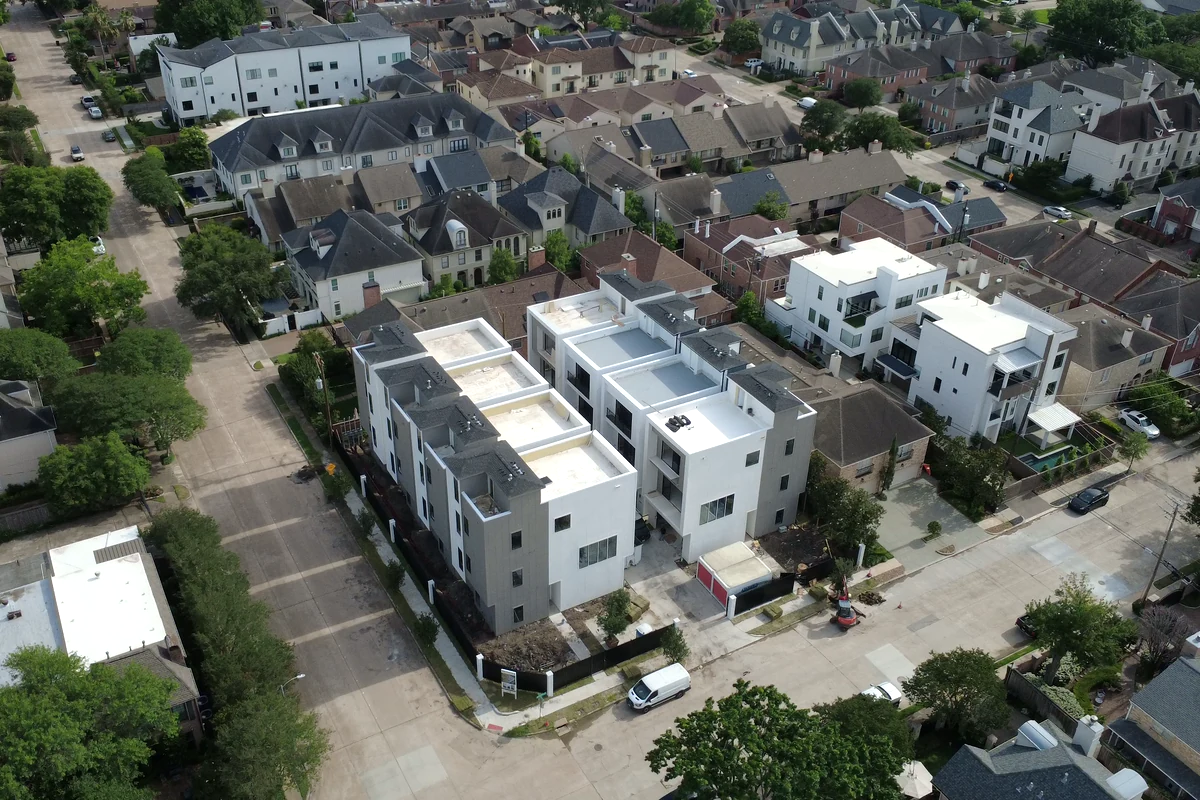
Before your construction lender funds a construction draw, someone gets in a truck and drives to your jobsite. The lender’s inspector — sometimes called a draw inspector or funds-control inspector — walks the project, compares what they see against what the contractor claims, and reports back to the bank. Their report decides whether your money moves this week or gets held for questions. Here’s what they actually look at, and how owners keep that visit boring.
What the construction draw inspector is really there to answer
The bank has one question: is the loan still adequately secured by the work in place? Every item on the inspector’s checklist rolls up to that. They are not there to judge craftsmanship or code compliance — that’s the city inspector’s job. They’re comparing three documents against physical reality: the schedule of values, the current pay application, and the previous inspection report.
The five things they check on every construction draw visit
- Percent complete, line by line. If the pay app says framing is 100% and drywall is 40%, they walk the building and judge exactly that. Rounding up is the fastest way to get a reduced funding recommendation.
- Stored materials. Materials on site but not installed (cabinets in boxes, a stack of trusses) are only fundable under certain conditions — properly stored, insured, and usually backed by invoices. Materials “on order” are generally not fundable at all.
- Consistency with the last visit. Inspectors keep photo logs. Work that regressed, sat idle for a month, or was covered up before verification raises flags that outlast the individual draw.
- Change-order alignment. If the field shows work that isn’t in the schedule of values — an added patio, a moved wall — the inspector notes scope drift. Unapproved scope is unfunded scope.
- Site condition signals. An abandoned-looking site, no visible subcontractor activity, or stored materials disappearing between visits — these are early-warning indicators banks take seriously.
How the construction draw inspection fits the funding timeline
On most Texas construction loans, the inspection is the gate between the contractor’s pay application and the bank’s wire. The contractor submits the construction draw package, the lender orders the inspection, the inspector visits within a few days, and the report goes back to the loan officer. Funding follows the report, not the application.
That sequence is why a clean construction draw package matters so much. If the inspector arrives and the pay application claims 80% on drywall while the walls are still open, the report flags the variance, the bank cuts the draw or holds it, and the whole cycle restarts. The delay is rarely a day. It is usually a week or two of subcontractors waiting on money.
Two references make the inspector’s job faster. The pay application should be on the AIA G702/G703 form most lenders expect, with the schedule of values matching the one the bank approved at closing. And the lien waivers in the construction draw package should follow the statutory Texas forms in Property Code Chapter 53, because an inspector or a title company will reject a waiver that does not.
Owners who bring in independent draw administration usually do it after the first stalled construction draw. The pattern is the same on most projects: the application and the inspection do not reconcile, waivers are missing, and nobody on the owner’s side has time to chase it. Getting the package right before the inspector’s truck arrives is the whole game.
A useful habit is to walk the site yourself, or have your owner’s representative walk it, two days before the inspector does — with the pay application in hand — and to fix any line that overstates progress before it reaches the bank. That single step removes most construction draw variances before they can become a funding hold.

What slows construction draw funding down
- Access problems. A locked site or no one to walk the inspector through costs you a full re-visit cycle — often a week.
- Pay app submitted before the work. Some contractors bill slightly ahead, assuming the work will be done by the time the inspector arrives. When it isn’t, the whole draw gets trimmed and the relationship with the bank takes the hit.
- Covered work. Insulation behind drywall, plumbing under slab — if it was covered before anyone verified it, expect questions, photos requests, or a hold.
- Retainage math errors. Inconsistent retainage between the G702 and G703 is one of the most common reasons packages bounce without ever reaching the inspector.

How owners make construction draw inspections fast
- Keep a dated photo log by schedule-of-values line — your own record, not just the contractor’s.
- Reconcile the pay application against your last site walk before it goes to the bank.
- Flag and price change orders the week they happen, so the paperwork matches the field.
- Make sure someone owner-side attends or reviews every inspection — the inspector works for the bank, not for you.
Need an independent draw inspector? Epex provides construction draw inspections for lenders in Houston and the surrounding areas, with reports within 3 business days.
Frequently asked questions about construction draw inspections
Does the lender’s inspector replace the city inspector?
No. The city inspector checks code compliance; the lender’s inspector checks that claimed progress and value are real. Passing one says nothing about the other.
Who pays for draw inspections?
Almost always the borrower — inspection fees are typically built into the loan as part of each draw’s cost, commonly a few hundred dollars per visit.
Can an owner dispute an inspector’s percent-complete call?
Yes — with documentation. A dated photo log and a line-item reconciliation are what turn a dispute into a correction. Without records, the inspector’s number stands.
Epex Consulting runs independent draw administration — owner-side verification of percent complete, lien-waiver tracking, and audit-ready files — for projects across Texas. Read our plain-English guide to how construction draws work, or book a project review.
One Response